February 6, 2026

A Shift Toward AI Visibility
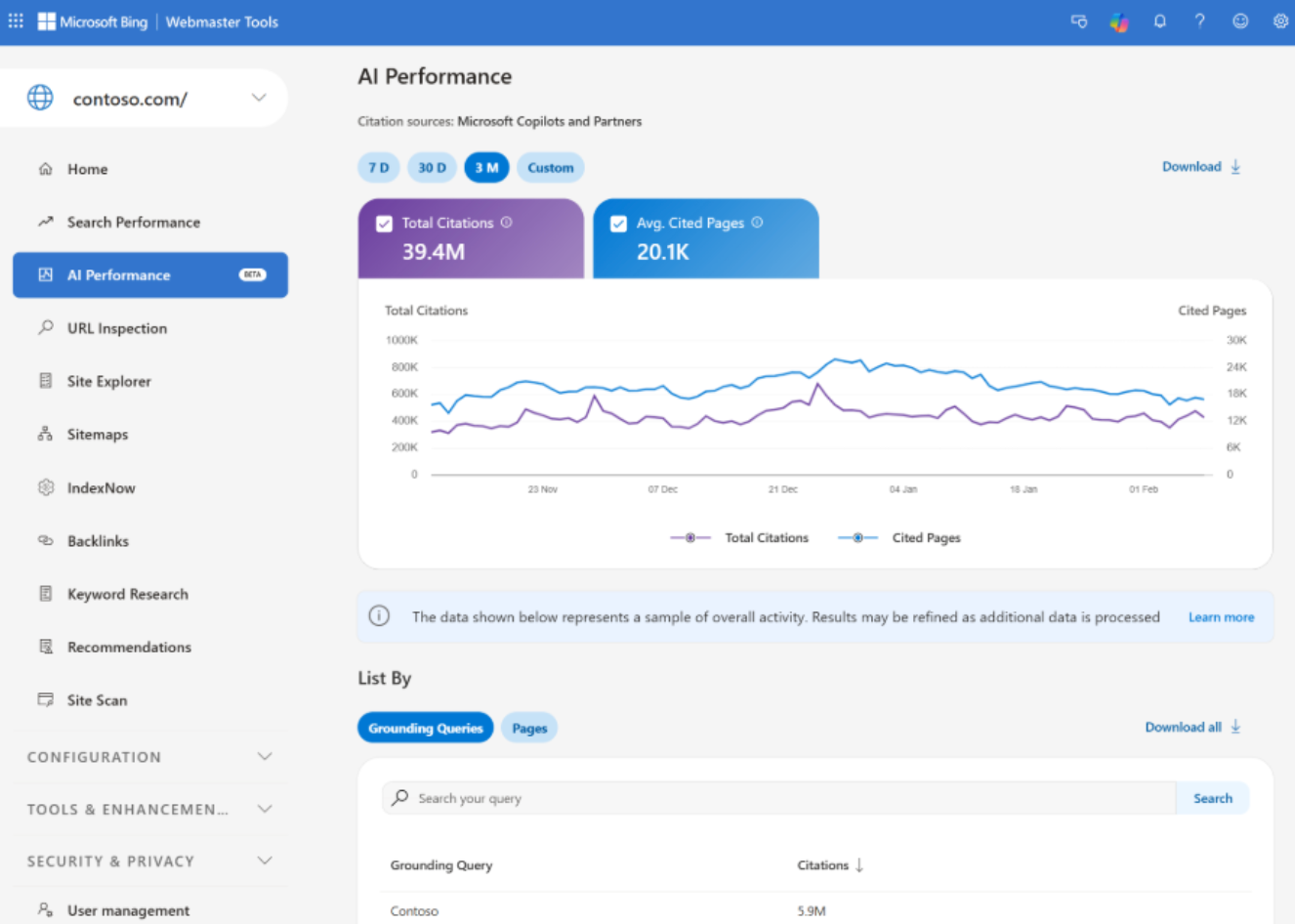
Microsoft describes AI Performance as an early step toward what it calls Generative Engine Optimization (GEO). As AI answers become an increasingly common way for users to discover information, visibility will not only depend on search ranking but also on how often content is referenced in AI responses.
While the dashboard does not currently include click-through or conversion metrics tied to these citations, it fills a significant gap by giving publishers first-party data on AI-level content usage.
What Marketers Should Do Next
The introduction of AI Performance highlights several important implications for content and search strategy:
- Measure Beyond Traditional SEO: Marketers should expand success metrics to include AI citation visibility alongside rankings and click-through rates, as citations signal topical relevance and AI trust.
- Identify High-Value Content: Pages frequently cited by AI should be prioritized for content updates, deeper coverage, and structural improvements to reinforce expertise and authority.
- Leverage Grounding Queries: Use the grounding queries data to refine keyword and topic strategy, aligning content more closely with real AI usage patterns.
- Enhance Content Quality: Improving clarity, structure, and factual depth can increase the likelihood of AI citation, making content more reference-worthy in generative answers.
- Integrate with Analytics: Because AI citations do not equate to traffic on their own, marketers should correlate AI Performance signals with analytics and conversion data to understand real business impact.
As AI systems play a larger role in how users find information online, tools like AI Performance may become essential for measuring and optimizing visibility in the evolving search landscape.
Conclusion: The Beginning of AI-Level Search Reporting
Microsoft’s AI Performance feature signals a broader evolution in search measurement. Traditional SEO focused on rankings and clicks; AI-driven search introduces citation visibility as an additional performance layer.
While still in preview, this feature gives marketers early access to actionable data on how AI systems interpret and use their content. As generative search experiences expand, understanding and optimising for AI citation visibility will likely become a core component of modern search strategy.
The shift is clear: visibility is no longer just about where you rank; it is about whether AI considers your content worth referencing.
